
The Federal Reserve Bank of New York's latest Household Debt and Credit Report (Q2 2025) shows that American families are carrying more debt than ever — and many are beginning to fall behind. These trends are showing up here in Minnesota, too.
📊 Debt Levels at a Glance
-
Total household debt is now $18.39 trillion — an increase of $185 billion in just one quarter.
-
Mortgages remain the largest category, at $12.94 trillion (about 70% of all debt).
-
Credit cards reached $1.21 trillion, the highest level on record.
-
Auto loans rose to $1.66 trillion, another all-time high.
-
Student loans stand at $1.64 trillion, with delinquencies rising as deferred payments from the pandemic era are finally hitting credit reports.
⚠️ Delinquencies Are Rising
The Fed report shows that 4.4% of all household debt is now delinquent, with serious stress in three areas:
-
Credit cards: Balances are at record highs, and delinquencies are climbing quickly.
-
Auto loans: Serious delinquencies are already above 2008 levels nationally.
-
Student loans: More than 10% of student debt is now 90+ days past due.
🏠 Minnesota Snapshot
Minnesota households are not immune:
-
Debt per person in the state is near the national average, with mortgages making up the bulk.
-
Credit card and auto delinquencies are climbing here just as they are nationwide.
-
Foreclosures and bankruptcies are rising modestly, signaling stress in household finances.
🔄 Comparing to the 2008 Crisis
In 2008, the crisis was fueled by mortgage defaults. Today's risks look different:
-
Mortgage delinquencies remain lower than they were in 2008, thanks to tighter lending standards.
-
Credit card and auto loan delinquencies are now at or above 2008 levels.
-
Student loan delinquencies are climbing sharply as paused payments from the pandemic return.
📊 Here's a quick comparison of delinquency trends in 2008 vs. 2025:
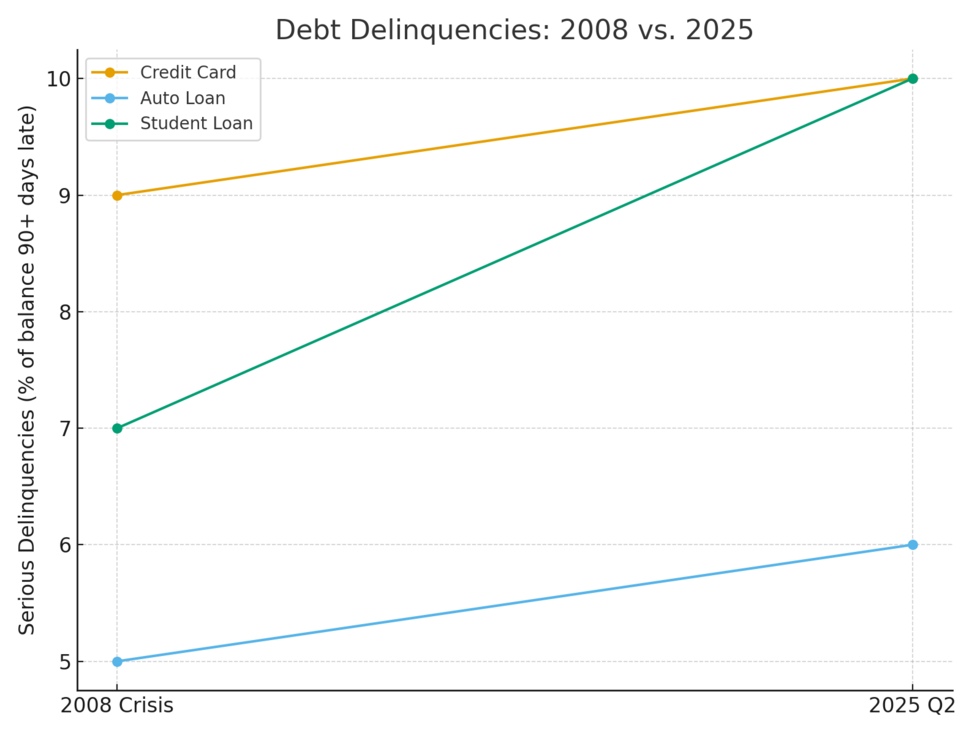
Source: Federal Reserve Bank of New York, Household Debt and Credit Report (Q2 2025). Percentages reflect balances 90+ days delinquent.
💡 What This Means for Minnesota Families
Debt problems don't go away on their own. High interest rates and rising delinquencies make it harder for families to recover without help. Bankruptcy may provide relief:
-
Chapter 7 Bankruptcy eliminates most unsecured debt, like credit cards and medical bills.
-
Chapter 13 Bankruptcy can stop foreclosure and reorganize debt into affordable payments.
-
Student Loan Relief is now possible under updated federal guidance — something that was nearly impossible before.
🛡️ Taking the Next Step
If you are worried about falling behind — or already are — you're not alone. Bankruptcy laws exist to give people a chance to reset and rebuild.
📞 Contact Butwinick Law Office today for a free consultation. We'll explain your options and help you protect your future.
For more information or to schedule an interview with Jeffrey Herman Butwinick, please click here: Free Consultaiton

Comments
There are no comments for this post. Be the first and Add your Comment below.
Leave a Comment